Online Support


The coastal town of Nerja, located on the eastern Costa del Sol, is one of the most charming and well-preserved destinations in the province of Malaga. It combines one of Europe’s mildest climates with the distinctive beauty of whitewashed houses of Moorish origin, set between golden beaches and the dramatic mountains of the Axarquia.
Unlike many resorts further west, Nerja has managed to retain its authentic character and has largely avoided the intensive high-rise development that transformed other parts of the Costa del Sol. The special geography of the area, where the steep slopes of the mountains drop directly into the sea forming cliffs and hidden coves, creates a landscape of outstanding natural beauty. This makes Nerja especially appealing to nature lovers, walkers and diving enthusiasts.
Whether you are visiting Nerja for the first time or returning as a regular, these five essential places should be at the top of your list. Together they offer a perfect balance of history, culture, nature and spectacular views.
1. Balcón de Europa
The undisputed symbol of Nerja is the Balcón de Europa. This iconic viewpoint stands on the site of the former Castillo Bajo, a coastal fortress ordered by the Catholic Monarchs in the early 16th century. Some historians suggest there may have been earlier Moorish defensive structures on the same cliff, although this remains a matter of debate.
During the Peninsular War the fortress was completely destroyed by British forces around 1812 and was never rebuilt as a military structure. Over time the site was transformed into the elegant public viewpoint we know today. It separates the beaches of El Salón and Calahonda and offers some of the finest panoramic views along this stretch of coast.
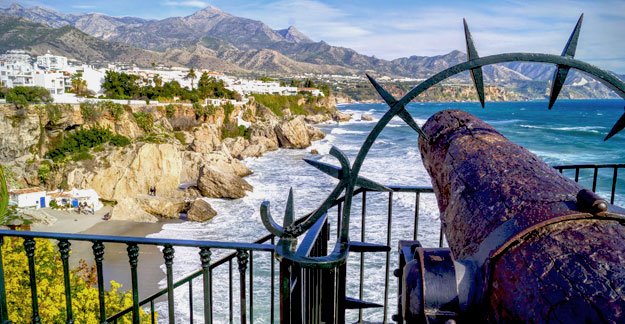
From the terrace you can look east towards the protected cliffs of Maro-Cerro Gordo and west along the coastline, with the mountains of the Sierras de Tejeda, Almijara and Alhama rising behind the town. A statue of King Alfonso XII, who is traditionally (though not entirely accurately) linked to the naming of the viewpoint, stands on the railing, and two historic cannons serve as reminders of the site’s military past.
Practical tips: Completely free and open 24 hours a day. The best times to visit are early morning (before 9:00) for peaceful photos or at sunset when the light is particularly beautiful. Allow 30–45 minutes. The area is fully accessible and surrounded by cafés and restaurants if you want to linger.
2. Nerja Old Town (Historic Centre)
One of the great pleasures of Nerja is simply wandering through its historic centre. The network of narrow pedestrian streets lined with white façades, flower-filled balconies and small squares creates a relaxed, authentic Andalusian atmosphere that is increasingly rare on the Costa del Sol.
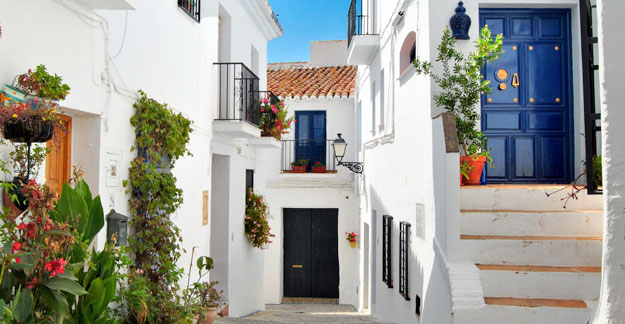
Two religious buildings are particularly worth seeking out. The Ermita de Nuestra Señora de las Angustias, completed around 1720, is a small but beautiful chapel that contains fine murals painted by artists of the Granada school. Nearby, the Iglesia de El Salvador (finished in 1697 and later enlarged) is a good example of the transition from Baroque to Neoclassical styles, with interesting Mudéjar elements in the ceiling of the central nave. The church is also one of the few in Spain that houses representations of all three archangels, as Saint Michael is the patron saint of Nerja.
Practical tips: Free to explore. Combine it easily with the Balcón de Europa, which is only a few minutes’ walk away. The best atmosphere is in the early morning or late afternoon. Take your time, stop for a coffee or a glass of wine on one of the terraces, and enjoy the slower pace of life that still characterises the centre of Nerja.
3. Acueducto del Águila
A short distance east of the town centre stands one of Nerja’s most surprising monuments: the Acueducto del Águila (Eagle’s Aqueduct). Built between 1879 and 1880 by the local master builder Francisco Cantarero, this elegant brick structure was designed to carry water across the deep Barranco de la Coladilla to the San Joaquín sugar factory in Maro.
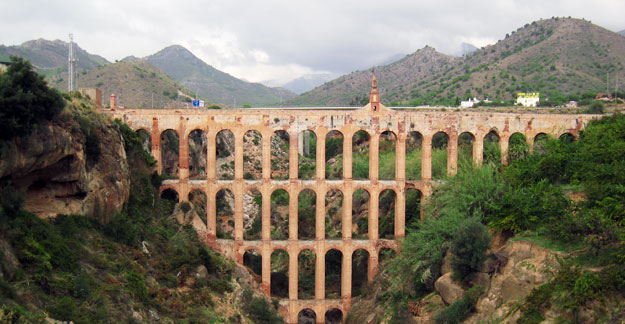
The aqueduct rises nearly 40 metres and consists of four tiers of arches. At the top sits a small temple crowned with a weather vane in the shape of a double-headed eagle, which gives the monument its name. Although the sugar factory closed long ago, the aqueduct is still used today to channel water for local irrigation. It was carefully restored between 2010 and 2012.
Practical tips: Free access with parking available on both sides of the N-340. The visit itself takes only 20–30 minutes, but the setting is very photogenic, especially in the soft light of early morning or late afternoon. It combines perfectly with a visit to the nearby Cueva de Nerja.
4. Cueva de Nerja
Just a few minutes from the aqueduct lies one of the great natural and archaeological wonders of Andalusia: the Cueva de Nerja. Discovered on 12 January 1959 by a group of young people from Maro who were looking for bats, the cave is often described as the “Natural Cathedral of the Costa del Sol”.

The cave system stretches for almost five kilometres and contains chambers of extraordinary size and beauty. In the Hall of the Cataclysm stands one of the largest known natural columns in the world — a fused stalactite and stalagmite approximately 32 metres high and estimated to be around 450,000 years old. Archaeological evidence shows that humans visited the cave for more than 40,000 years, and the site contains important prehistoric paintings (although their exact dating continues to be studied and debated by specialists).
Every summer the International Festival of Music and Dance takes place in the gardens outside the cave (performances were moved outdoors in recent years to protect the interior). The festival has featured many internationally renowned artists since it began in 1960.
Practical tips: It is strongly recommended to buy tickets in advance on the official website cuevadenerja.es. The visit lasts approximately 1–1.5 hours. Opening hours vary by season (typically from 9:15 in the morning, with longer hours in summer). Tickets usually include entry to the Nerja Museum in the town centre and a virtual-reality experience. Arrive early if possible to avoid the largest groups.
5. Acantilados de Maro-Cerro Gordo
About four kilometres east of Nerja begins the Paraje Natural de los Acantilados de Maro-Cerro Gordo, one of the most beautiful protected coastal landscapes in the province of Malaga. Dramatic cliffs plunge into the Mediterranean, creating a series of secluded coves with crystal-clear water that are paradise for swimmers, snorkellers and divers.

The Balcón de Maro offers one of the best overall viewpoints and is a good starting point. Along the cliffs you will also find the remains of several 16th-century watchtowers built to defend the coast against pirate attacks. Many of the most spectacular viewpoints and hidden beaches can only be reached on foot, which helps preserve the wild character of the area.
Practical tips: Free access, although in summer vehicle access to some of the more popular beaches is restricted and a shuttle service operates. Wear comfortable walking shoes, take water and sun protection. The area is ideal for hiking, and combining a walk with a boat or kayak trip is highly recommended.
Recommended itinerary
A logical and enjoyable way to experience these five places in one day is to start in the centre of Nerja with the Balcón de Europa and the historic streets in the morning. Then drive or take a short taxi ride east to the Acueducto del Águila and the Cueva de Nerja. Finish the day exploring the Acantilados de Maro, when the light is at its best for photography and the temperature is more comfortable for walking.
If you are arriving from Malaga Airport, a private transfer allows you to start your visit to Nerja without the stress of public transport, especially useful if you plan to visit the cave and the cliffs on the same day.
Nerja rewards those who take the time to explore beyond the main beach. These five essential visits reveal the town’s unique combination of history, nature and authentic Andalusian atmosphere that continues to make it one of the most special destinations on the Costa del Sol.
Book your private transfer from Malaga Airport to Nerja: Malaga Airport to Nerja transfers.