Online Support


Nerja Cave, a true hidden treasure on the beautiful coast of Malaga, is much more than a simple geological formation. Discovered in 1959, this destination piques the curiosity of travelers from all over the world with its rich history and astonishing natural beauty. In the depths of this cavern, visitors embark on a journey through time, exploring impressive stalactites and stalagmites that have been growing for thousands of years.
What makes Nerja Cave even more special are the surprises that await those who venture inside: magical lighting that highlights every detail and unique acoustics that have made this place the setting for unforgettable concerts and cultural events. In this article, we invite you to discover the fascinating history of the cave, explore its underground wonders, and learn about the exciting activities it offers throughout the year. Nerja Cave awaits you, ready to reveal its secrets and amaze you at every step of your visit.
History
Nerja Cave has an intriguing history. Discovered in 1959, it has become a renowned archaeological landmark. Over millions of years, its stalactites and stalagmites have developed gradually, creating a stunning underground landscape.
What makes it even more special is its human history. Archaeological investigations have revealed traces of prehistoric occupation dating back over 25,000 years. The cave paintings found inside are authentic treasures, providing a glimpse into humanity’s ancient past.
However, the modern history of Nerja Cave truly began in 1959 when five intrepid explorers discovered its entrance while chasing a bat. What initially seemed like a simple adventure turned into a historic discovery.
Since then, excavations and archaeological studies have unveiled the complexity of this network of galleries and chambers. The cave is a time capsule, connecting the present to a deep and enigmatic past.
Discover Nerja Cave
Inside Nerja Cave, the visitor delves into an underground world of wonders. Impressive stalactite and stalagmite formations extend majestically through the chambers and passages.
Stalactites hang from the cave’s ceiling like natural jewels dripping from above, and stalagmites emerge from the ground like petrified columns rising to the ceiling. This underground landscape is a testament to nature’s astonishing creativity over millennia.
Strategic lighting enhances every detail, creating a magical atmosphere. Colors and shadows bring the formations to life, offering a dazzling view in every corner. The cave, in silence, tells a story of the Earth through its formations.
As you progress through the expansive galleries, you encounter natural sculptures that challenge the imagination. You can see stalactites resembling frozen curtains or stalagmites intertwining like pillars in an underground cathedral.
Nerja Cave is a true geological museum in motion, where living stone continues its slow dance of growth and transformation. Every corner is a surprise, and every visit reveals new details to explore.
Interior
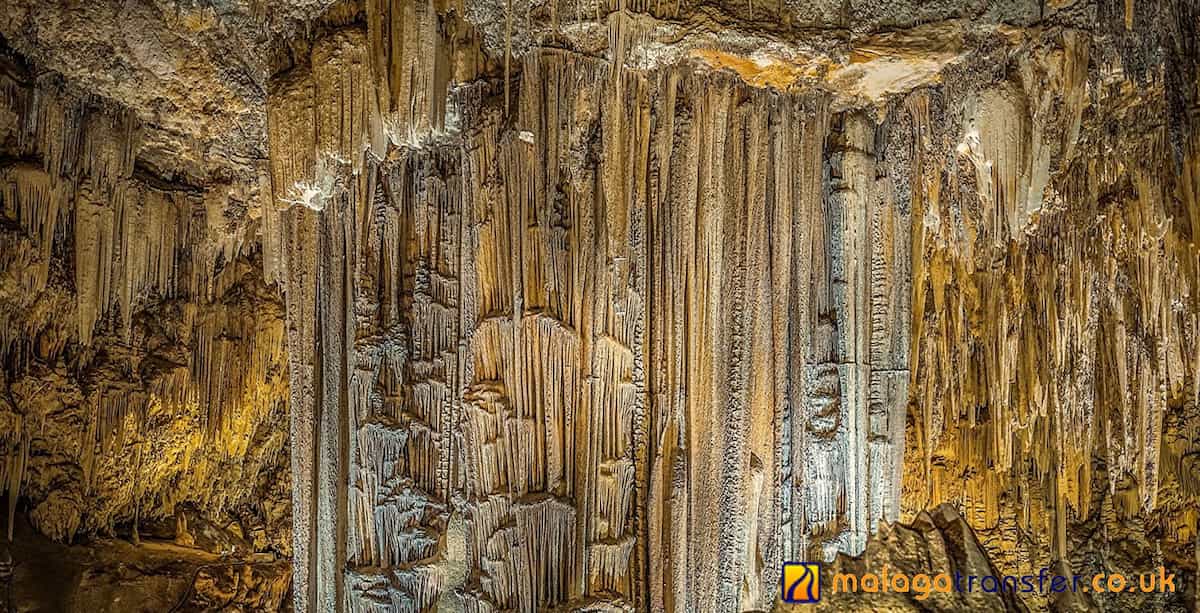
- The Waterfall Chamber: This is one of the first areas that visitors explore. It’s named after a formation that resembles a petrified waterfall.
- The Lava Flow Chamber: Here, you can observe formations that look like lava flows, adding a unique element to the experience.
- The Ghosts Chamber: Named so due to stalactites and stalagmites that resemble ethereal and mysterious figures.
- The Cataclysm Chamber: Characterized by the presence of massive columns that appear to have been sculpted by a geological cataclysm.
- The Dreams Gallery: This area features formations that resemble cloud-shaped stalactites, creating a dreamlike atmosphere.
- The Ballet Chamber: As the name suggests, this chamber houses stalactites and stalagmites that resemble dancers in the midst of a performance.
- The Giants Gallery: In this part, the massive dimensions of the formations make you feel small in comparison.
- The Mine Vestibule: This is where the main entrance to the cave is located, and it’s the starting point for exploration.
- The Marvels Mine: It’s the final point of the tourist visit and gets its name from the beauty of the formations found within.
Recent Discoveries
Inside Nerja Cave, in the Ghosts Chamber, a prehistoric treasure awaits visitors: seal paintings. These artistic representations, dating back over 20,000 years, are a direct window to the past and a testament to human ingenuity in ancient times.
What makes these paintings even more special is their accessibility. Unlike many rock art works found in remote and hard-to-reach places, the seal paintings in Nerja Cave are easily accessible to tourists. This accessibility has greatly contributed to their popularity, allowing you to witness this prehistoric artistic expression for yourself.
These paintings are not just a tourist attraction but also part of the cultural heritage of humanity. They are considered one of the region’s primary archaeological treasures, and their age and realism make them a vivid testament to the life and beliefs of the people who inhabited the area in the distant past.
Activities
Nerja Cave is not just a geological museum but also a stage for unique cultural events. Throughout the year, this magical cavern comes to life with a variety of activities and events that attract visitors from all over.
One of the most notable activities is the hosting of concerts. The exceptional acoustics of the cave make it an impressive venue for musical performances. Concerts in this unique environment are truly memorable and offer an unparalleled auditory experience.
In addition to music, Nerja Cave also hosts theatrical performances and cultural events that take advantage of the cave’s beauty and special atmosphere to create unique experiences.
Annual events vary, but they all share the fact that they take place in an underground environment, adding a unique dimension to each experience.

What to See in the Area
Nerja Cave is situated in a prime location on the Costa del Sol, which means there’s much more to explore in the surroundings. Here are some suggestions to make the most of your visit:
- Balcony of Europe: This is one of Nerja’s most iconic spots. The Balcony of Europe is an observation point offering panoramic views of the Mediterranean and the town of Nerja. It’s a perfect place for a leisurely stroll and to enjoy the sea breeze.
- Nerja Beaches: The Costa del Sol is famous for its golden beaches. You can relax on Nerja’s beaches, such as Burriana Beach, which features a wide range of bars and restaurants along its promenade.
- Natural Park of the Sierras de Tejeda, Almijara, and Alhama: If you’re passionate about nature, this park is a gem. It offers hiking trails, bird-watching opportunities, and breathtaking landscapes.
- Frigiliana: This charming Andalusian white village is a short drive from Nerja. Its narrow cobbled streets, whitewashed houses, and potted flowers create a picturesque atmosphere. Don’t forget to try the local cane honey.
- Maro: This small coastal village is located a few kilometers east of Nerja. Maro is famous for its secluded beach with crystal-clear waters and the Maro-Cerro Gordo Cliffs Natural Area, a nature reserve ideal for snorkeling and hiking.
- Nerja Cave: Of course, don’t miss exploring the cave itself. Guided tours will take you through its impressive galleries and share the history and geology of this underground wonder.
Check our article about things to do in Nerja.
How to Get There
Nerja Cave is located approximately 60 kilometers east of Malaga, on the Costa del Sol. Malaga Airport is the main gateway for visitors arriving by air.
You can take a Malaga airport transfer to Nerja or rent a car to reach the cave in about an hour. There are also bus services connecting Malaga and Nerja, providing a public transport option.
Once in Nerja, the cave is a short drive or taxi ride away. Directions are clearly visible from the town center, making it easy and convenient for visitors to reach Nerja Cave.
How to Get to Nerja Cave by Car from the Western Costa del Sol
- From the western Costa del Sol, begin your journey by driving on the A-7 highway heading east.
- Continue on the A-7 and take exit 929 from the A-7. This will lead you towards your destination in Nerja.
- Follow the signs and directions to reach Carr. de Almería/N-340.
- Once on Carr. de Almería/N-340, follow the directions to Calle Ctra. a la Cueva.