Online Support


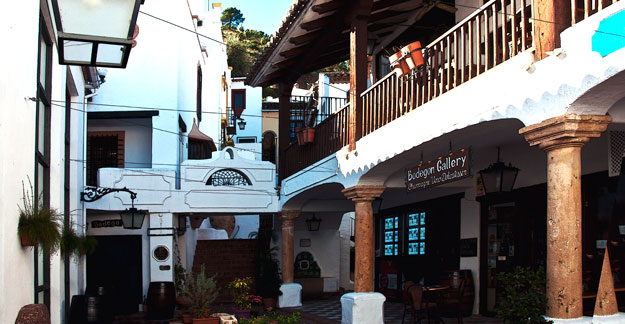
Benahavís is a beautiful white mountain village and one of the most exclusive hidden gems on the Costa del Sol. Nestled between Marbella, Estepona and the Serranía de Ronda, just 7 kilometres from the coast, it combines the authentic charm of an Andalusí hill town with some of the most expensive luxury developments in Spain and one of the highest per capita incomes in the country.
A short drive from San Pedro de Alcántara and Puerto Banús, Benahavís sits on the slopes of Monte Matrona, in the foothills of the Serranía de Ronda. Luxury here is discreet: villas and gated estates fold into pine, holm oak and cork woodland, crossed by the Guadalmina, Guadaiza and Guadalmansa rivers.
It is no surprise that the village is known as the “Dining Room of the Costa del Sol”. A compact old town packs in dozens of restaurants, mountain tapas, international kitchens and the Sabor a Málaga Hospitality School. Book a Malaga Airport transfer to Benahavís and you are typically there in 50–60 minutes — time enough to go from the whitewashed streets to a golf course, the natural pools on the Guadalmina, or a long lunch.
- 1 How to get to Benahavís from Malaga Airport
- 2 A short history of an independent Andalusí village
- 3 What to see in Benahavís: monuments and viewpoints
- 4 Nature: rivers, natural pools and Torre Leonera Park
- 5 Golf courses in Benahavís
- 6 Food: why it is called the Dining Room of the Costa del Sol
- 7 Festivals and traditions in Benahavís
- 8 Benahavís in a day (or a weekend)
- 9 Practical tips for visiting Benahavís
How to get to Benahavís from Malaga Airport
Benahavís lies around 70 kilometres from Malaga-Costa del Sol Airport (AGP). The usual route follows the A-7 / AP-7 towards Marbella and Estepona, then climbs the local road into the village. In normal traffic the journey takes 50 to 70 minutes, depending on the Costa del Sol and your exact drop-off (the old town, La Zagaleta, Los Flamingos, Los Arqueros, Monte Mayor or another urbanisation).
There is no direct bus from the terminal. Public transport means a change in Marbella or San Pedro de Alcántara and a final hop by local bus or taxi — often more than two hours with luggage. A private transfer is the straightforward option: meet-and-greet in arrivals, a vehicle sized for the group and golf clubs, and a drop at the hotel, villa or gated-community gate.
If you are travelling with clubs, a child seat or a family group, book your taxi or minibus from Malaga Airport to Benahavís in advance. From the village, Marbella old town is about 25–30 minutes, Puerto Banús 15–20 and Estepona 20–25.
A short history of an independent Andalusí village
The first lasting settlement grew at the end of the 11th century in the shadow of Montemayor Castle. The place name recalls Havis (or Avis), the notable linked to that fortress. After the Christian conquest of 1485, Benahavís answered to Marbella for decades and became an independent municipality in the 16th century.
That double identity — a lookout over the coast and a mountain village — still shapes the landscape: watchtowers, a town hall in a 16th-century Nasrid-style palace and, a few kilometres away, championship golf and first-rank residential estates. The old town remains a white maze of narrow streets, flowerpots and small squares, best seen on foot.

What to see in Benahavís: monuments and viewpoints
Montemayor Castle
Montemayor Castle, a 10th-century fortress at about 579 metres, served as a stronghold and lookout through the taifa wars, the Morisco rebellion and the Peninsular War. Only ruins remain, but the climb is worth it: on a clear day the view runs for tens of kilometres along the coast and out to the Rock of Gibraltar and the African shoreline.
Sections of the walled enclosures survive, together with the Queen’s Tower, chambers and cisterns that still show traces of their original lining. The hills around once held small ruby workings. Wear closed shoes, carry water and avoid the hottest hours in summer — the village sits higher than the beach and the sun is sharper.
Town hall, church and watchtowers
Benahavís Town Hall occupies a 16th-century palace with Nasrid character, a courtyard and a tower, at Avenida de Andalucía, 34. The Church of Our Lady of the Rosary, 18th-century and later remodelled, is the parish church and the starting point for Holy Week processions.
The old Andalusí defensive line is completed by towers such as Leonera (in the park of the same name, above the Guadalmina), Alcuzcuz, Tramores and Daidín. They are quiet landmarks, easy to stitch into a walk rather than a checklist.
Other places of interest:
- Church of the Virgen del Rosario: 18th-century church, several times restored. (Map)
- Town Hall: 16th-century palace. Avenida de Andalucía, 34. (Map)
- Cardenillo Mines: copper workings already used by the Romans in the 2nd–1st centuries BC. (Map)
- Lápiz Mines: graphite extracted between 1749 and 1854; output reached some 150,000 tonnes and helped make the fortune of Manuel Agustín Heredia.
More heritage background from Malaga Provincial Council: Benahavís heritage.
Nature: rivers, natural pools and Torre Leonera Park
Benahavís has no beach of its own, and that is the point: woodland, river and sierra a short hop from the Costa del Sol. The stand-out swim spots are the natural pools on the Guadalmina, busy in high summer.
- Rock Pool (Piscina de Roca) — Google Maps
- Charco de las Mozas — Google Maps
The sensible plan is to leave the car in the village or at the lower car park and walk about 2 kilometres. The riverside path is lovely, but some stretches mean wading or swimming. Wear water shoes with a grip for rock, do not dive (the bed is uneven) and stay out of the channel after heavy rain: flash rises are fast.
Torre Leonera Park, beside the Guadalmina and named after the 12th–13th-century watchtower above it, is the place to rest after the walk, bring children and, now and then, catch an open-air concert. Location: Google Maps.
Other corners often listed by Visit Costa del Sol include Cerro del Duque, Las Máquinas, the Guadalmansa valley, Puerto Capuchino cave and the La Leche reservoir. More technical visitors can canyon the narrows of the Guadalmina with a licensed guide.
Golf courses in Benahavís
The municipality is one of the densest golf destinations in Europe: around a dozen 9-, 18- and 27-hole layouts among pines, with mountain and sea views. Benahavís is regularly named among the Spanish towns with the most courses, behind only places such as Marbella or Mijas.
Well-known names include Los Flamingos Golf Club, Alferini, Tramores, La Zagaleta (private), Monte Mayor Golf Club, Los Arqueros Golf & Country Club, El Higueral, La Quinta and the Villa Padierna complex. The spread runs from visitor green fees to tightly restricted clubs.

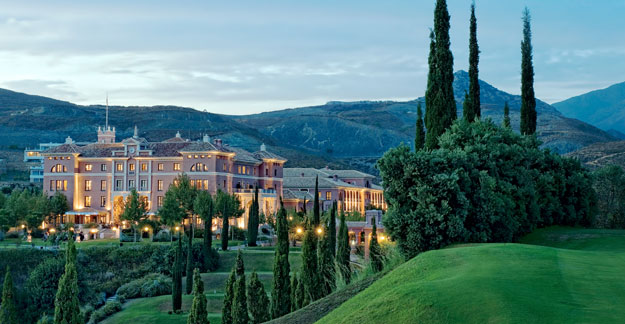
Set among the fairways of Los Flamingos is one of Spain’s most elegant hotels: the Hotel Villa Padierna, a neoclassical resort chosen by Michelle Obama during her 2010 visit to the area. If the trip is a tournament week or a golf holiday, a door-to-door transfer saves the terminal car park and the A-7 with a boot full of clubs.
Food: why it is called the Dining Room of the Costa del Sol
Between sea and sierra, Benahavís cooking mixes inland stews with coastal produce. Dishes that return again and again on village menus include garlic rabbit, partridge, roast suckling pig, lamb, marinated pork tenderloin, chorizos cooked in water and a fish-and-shellfish zarzuela, alongside ajoblanco, pipirrana and Malaga wines.
Streets such as Calle Estepona and Calle Málaga hold much of the scene: classic Andalusian cooking, charcoal grills, tapas, international rooms and more formal tables. Names that have been on local lists for years include Bodegón Gallery, Amanhavís, Rufino (open since 1985), Los Abanicos, Sabor and Bodeguita El Chico. Book ahead, especially at weekends and in August.
A distinctive piece of the village is the Benahavís Sabor a Málaga Hospitality School (Avenida de Andalucía, 23). Its training restaurant serves a weekday lunch menu cooked and waited by students; it fills quickly and needs a reservation. It is an affordable way to taste the standard that later turns up in hotels and restaurants across the province.
Festivals and traditions in Benahavís
The official calendar turns on the patron saint, Our Lady of the Rosary, and on a small but deeply felt Holy Week.
Benahavís Fair
Every year, around 15 August, the village holds its Fair and Fiestas in honour of the Virgen del Rosario. The programme usually runs four or five days: the lights going on, a proclamation, the crowning of the festival queens and ladies, rides beside the sports facilities, a daytime fair, live music, casetas, dancing on Avenida de Andalucía, Plaza de España and Plaza del Pilar, and a procession on the main day.
A typical programme includes a rociero mass and procession on the 15th, popular tastings (often a communal grill), children’s activities and, in recent editions, a “quiet hour” at the start of each evening so children with sensory hypersensitivity can enjoy the rides too. Exact dates are published by the Town Hall each summer; if you are travelling in August, check benahavis.es before you book a table or a transfer.
Pilgrimage of the Virgen del Rosario (7 October)
7 October is a local holiday and the day of the romería. Tradition has it that, during a cholera epidemic, an attempt was made to carry the patron saint out of the village; the cart became impossible to move at Charco de las Mozas until they turned back, and the cholera never reached Benahavís.
The day usually begins early with free chocolate and churros on Avenida de Andalucía. The image is then taken to the Chapel of Our Lady of the Rosary and Saint Joseph of Al Cuz-Cuz, followed by a rociero mass and an afternoon of food, music and tents around the hermitage. It is one of the most authentic dates in the calendar, alongside Holy Week.
Holy Week
On Good Friday the Christ of the Vera Cruz and María Santísima de la Soledad process through the streets. On Easter Sunday, Our Lady of the Rosary meets “El Niño” the Risen Child. The route runs through the old town (Plaza de España, Calle Málaga, Calle Almendro, Avenida de Andalucía, Calle Estepona). If it coincides with your stay, walk in: the village fills and parking near the centre is scarce.
Benahavís in a day (or a weekend)
With one day: coffee in the old town, a climb or viewpoint towards Montemayor, a stroll in Torre Leonera Park and a proper lunch in the village. If the heat allows, add Charco de las Mozas first thing. With a weekend: a morning of golf, an afternoon in San Pedro or Puerto Banús and tapas back among the white walls at night.
Easy drives nearby:
- San Pedro de Alcántara and its beaches, about 10 minutes away.
- Puerto Banús and Nueva Andalucía, for the marina, shopping and the golf valley.
- Marbella old town and Estepona, both under half an hour.
- The road towards Ronda, if you want the gorge, more white villages and another range of hills.
Practical tips for visiting Benahavís
- Best time: April–June and September–October for walking and terraces. August means the fair, inland heat and more visitors. In July and August, aim for the river pools early or stay in the shade.
- Cars in the old town: streets are narrow. Leave the car at edge-of-village parking and walk up.
- Bookings: village restaurants and the school restaurant fill at weekends.
- Golf and villas: give the transfer the urbanisation name and gate number; several estates are private and the driver needs the exact reference.
- On the river: there is no lifeguard. Respect the flow, take your rubbish with you, and check whether the bar you head to afterwards takes cards — this is a small village, not a self-contained resort.
Benahavís works as a quiet base for anyone who wants the Costa del Sol without living on the promenade: Andalusí history, serious food, golf and hills, one transfer from the airport. Book your Malaga Airport transfer to Benahavís and start the trip at the villa door, the hotel or the first tee.