Online Support


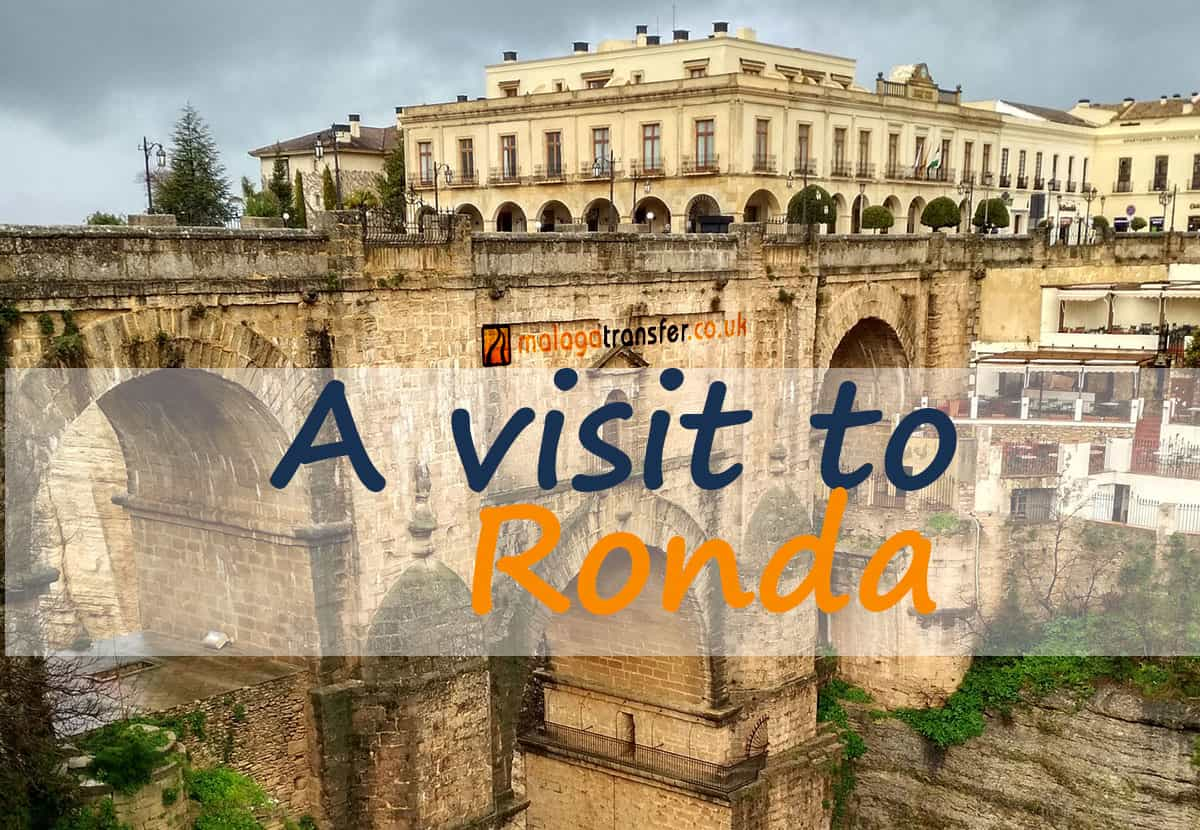
Situated approximately 750 metres above sea level in the beautiful natural scenery of the Serranía de Ronda, this ancient inland city is without doubt a place worth visiting thanks to its enormous historical heritage. Traces ranging from prehistoric times through the Romans and Arabs right up to the present day can still be discovered throughout the town. Ronda has so much to offer that it is well worth planning a two-day stay to fully enjoy its monumental wealth at a relaxed pace.
We recommend some of the most essential locations so you can enjoy this inland jewel of Andalusia without rushing. Remember that we can take you there and back on the same day; transport is no excuse for missing one of Andalusia’s true treasures.
It is definitely worth spending a day trip in Ronda and walking through its ancient streets — you will not regret it.
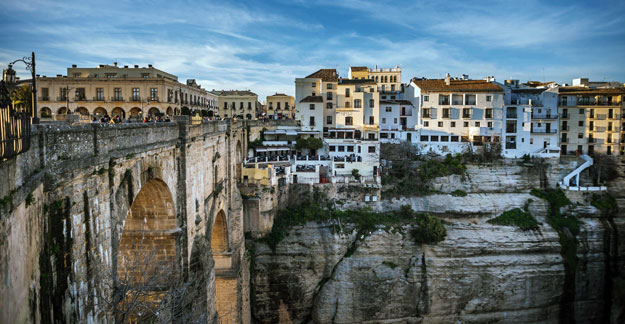
Puente Nuevo (New Bridge)
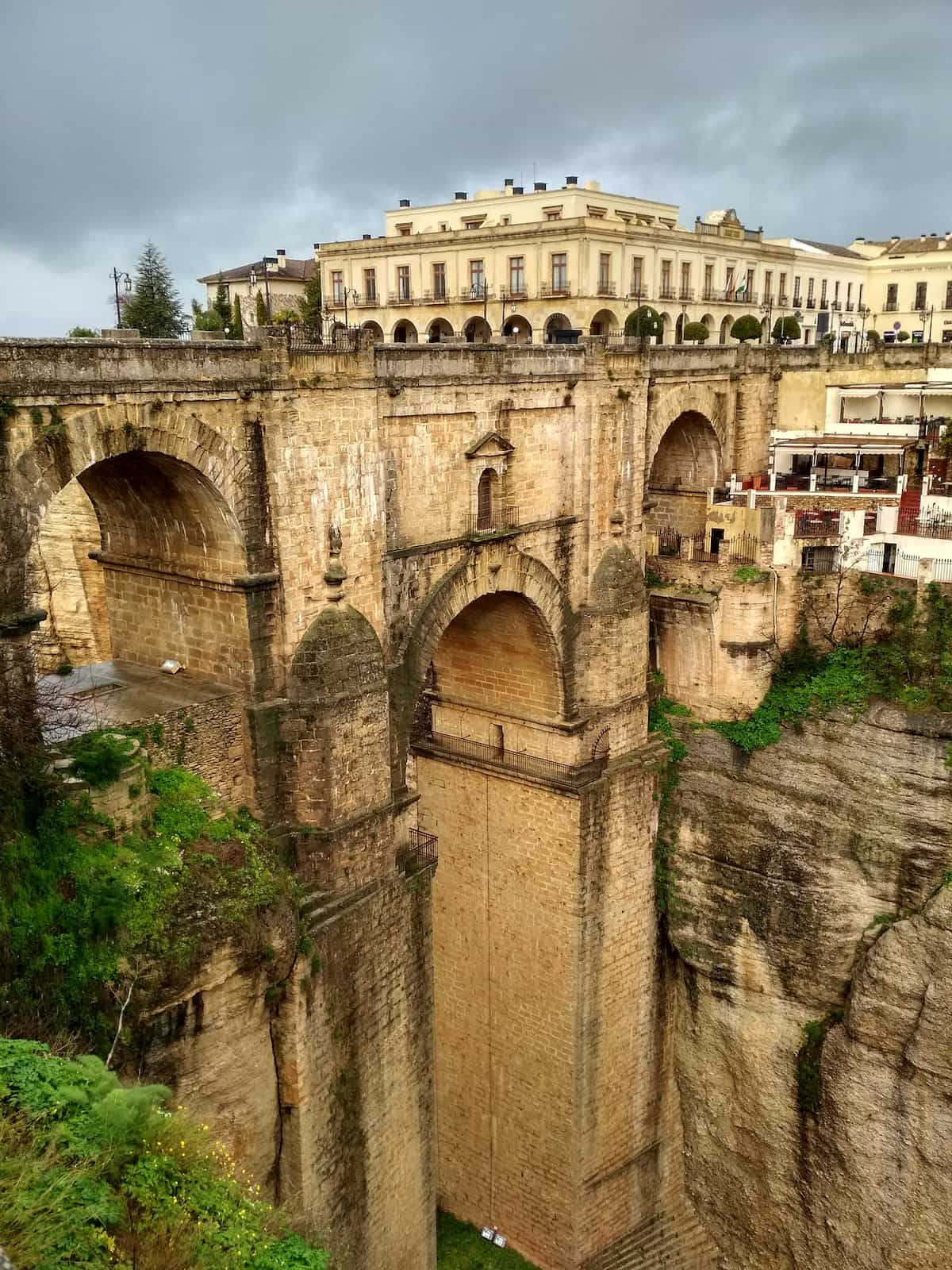
One of the most important and iconic monuments of Ronda is the Puente Nuevo, which stands nearly 100 metres above the dramatic Tajo Gorge (El Tajo). The New Bridge is not only a masterpiece of 18th-century engineering but also offers some of the most spectacular views in Andalusia.

The first attempt to build a bridge at this height dates back to 1735, but that structure collapsed a few years later (around 1741), probably due to construction defects. Work on the present bridge began in the mid-18th century and was completed and opened in 1793 under the direction of the architect José Martín de Aldehuela.
Walking around the area you can see that the bridge contains a chamber inside. What was it used for? In the past it served as a prison (especially for bandits and later political prisoners), it was also used as an inn, and nowadays it houses an interpretation centre and small museum dedicated to the history of the bridge.
Casa del Gigante
It is well worth taking your time to walk through the city and discover the old Arab quarter. In the three historic districts of Ronda you will find a huge variety of buildings. The Casa del Gigante is one of the best-preserved examples of Moorish (Nasrid) domestic architecture in the province, and it still displays far older stone reliefs of Phoenician or Punic origin that give the house its name.
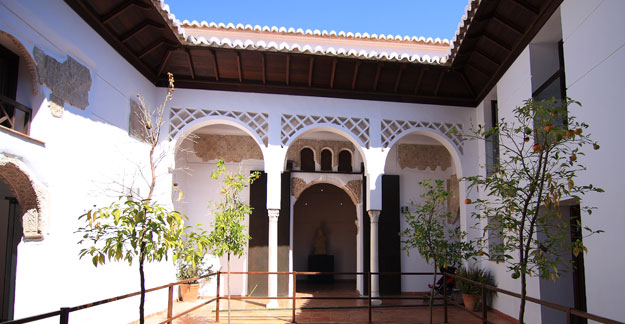
This private house dates from the end of the 13th century or the beginning of the 14th century and was an important residence during the Muslim period. In the 19th century it was converted into a shelter for abandoned or orphaned children. It later returned to private ownership and was carefully restored and opened as a museum and interpretation centre in the early 21st century, showing what everyday Muslim life was like in medieval Ronda.
Plaza de Toros (Bullring)
The Bullring of Ronda (Plaza de Toros de la Real Maestranza de Caballería) is one of the oldest and most monumental in Spain. In fact, Ronda is widely regarded as one of the cradles of modern bullfighting, which developed in the 18th century.

During the 16th century defensive and training needs led to the creation of the Real Maestranza de Caballería de Ronda. Horsemen practised there, and these exercises gradually evolved into games involving bulls that demonstrated the riders’ skill. In the 18th century professional bullfighters took over from the horsemen; the spectacle became extremely popular and required proper enclosed venues. This popularity gave birth to the present Plaza de Toros de Ronda, designed by the same architect who completed the Puente Nuevo, José Martín de Aldehuela.
As a curiosity, the first bullfighting festivities already took place in 1784 even though the bullring was still unfinished. The official inauguration took place in May 1785. Today the complex also houses an excellent bullfighting museum, so if you are interested in the historical aspects of Ronda you should not miss the opportunity to visit it.
Casa de Don Bosco
Another very interesting building, especially for its privileged location, is the Casa de Don Bosco. It is a modernist palace from the beginning of the 20th century situated right on the edge of the gorge in the heart of Ronda’s historic centre. It has a beautiful courtyard and gardens that run along the precipice, offering splendid views over the Sierra and the Tajo.
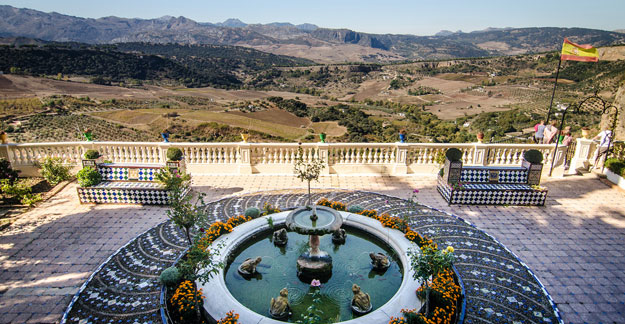
Juan Bosco (Don Bosco) was an Italian priest and educator who achieved great prestige for his work with needy young people and founded the Salesian congregation, one of the largest Catholic religious groups in the world. Despite its name, the house was never his residence. It was a private property that was eventually donated to the Salesians in the mid-20th century and used as a rest home. Inside you will find 19th-century tapestries, a typical Ronda fireplace, period furniture and gardens with spectacular views of the gorge and the Puente Nuevo.
Arab Baths (Baños Árabes)
The 13th-century Arab baths of Ronda are in remarkably good condition and are considered one of the best-preserved Islamic baths in the whole of Spain from that period.
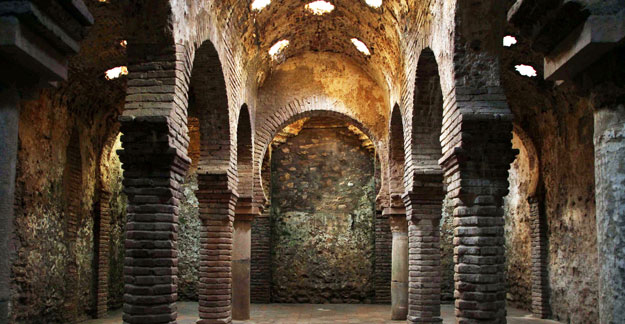
In the past there were as many as four Arab baths in the city, some of them right in the centre. This particular hammam is located near the river (at the confluence of the Guadalevín and the Arroyo de las Culebras), which facilitated the supply of water through an ingenious system of waterwheels and aqueducts that can still be seen today. The complex retains the classic sequence of cold, warm and hot rooms under star-shaped skylights.
More Activities and Places of Interest in Ronda
At the Municipal Tourist Office (located in Paseo Blas Infante, next to the Bullring) you can obtain the City Pass (Bono Turístico). It includes tickets to the Interpretation Centre of the New Bridge, the Mondragón Palace (Municipal Archaeological Museum), the Casa del Gigante, the Arab Baths and the Joaquín Peinado Museum of Contemporary Painting.
After this long and rewarding walk you will certainly be looking forward to sampling the Gastronomy of Ronda. We highly recommend trying the culinary specialities of the Serranía “a la Rondeña”, which feature a wide variety of meats and seasonal local products.
Natural Areas around Ronda
Due to its proximity to the city centre it is worth mentioning the urban park of the Dehesa del Mercadillo. Here you can enjoy a pine forest only a short distance from the historic centre as well as beautiful views of the Tajo de Ronda.
Approximately 20–22 kilometres from Ronda, in the town of Benaoján, lies the famous Cueva de la Pileta, which contains an extraordinary collection of prehistoric cave paintings. Visits are by guided tour only and advance reservation is strongly recommended. Current adult tickets cost around 15 € (children 5–10 years approximately 10 €). Always check the official website or telephone for the latest opening times and prices before travelling, as they can change.
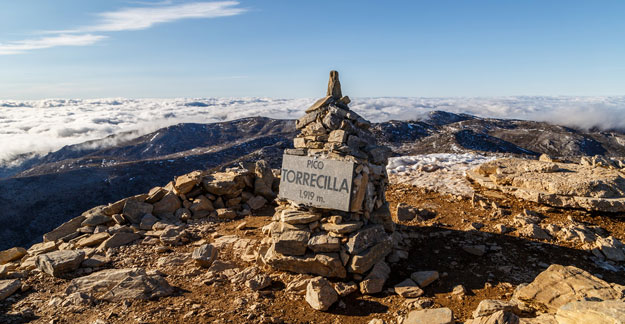
Finally we highlight the Sierra de las Nieves Natural Park (now largely a National Park). Its name comes from the fact that its highest summit, Torrecilla (1,919 m), is frequently covered in snow in winter. This beautiful protected area still contains many white villages, deep ravines, forests of the rare Spanish fir (pinsapo) and clear rivers, and it is well worth a separate trip.
Book now your transfer from Malaga Airport to Ronda and discover this unique city — you will love it!